
A flat or low-slope roof in Western New York takes a beating most roofs never see. Lake-effect snow sits on it for weeks, freeze-thaw cycles open every seam, and summer sun cooks whatever’s left. When that roof starts leaking, most owners get one quote: tear it off and start again. Often that’s the wrong answer. If the deck is sound, a roof coating system from our Falconer crew seals the whole surface, stops the leaks and adds years to the roof for a fraction of a replacement.
The upside isn’t just a dry building. A reflective coating keeps the roof surface cooler through a July heatwave, and an SPF system adds a continuous layer of insulation over the whole deck, roughly R-6 per inch of foam, with no thermal breaks at the fasteners. For a shop or warehouse that’s heated all winter, that shows up on the gas bill.
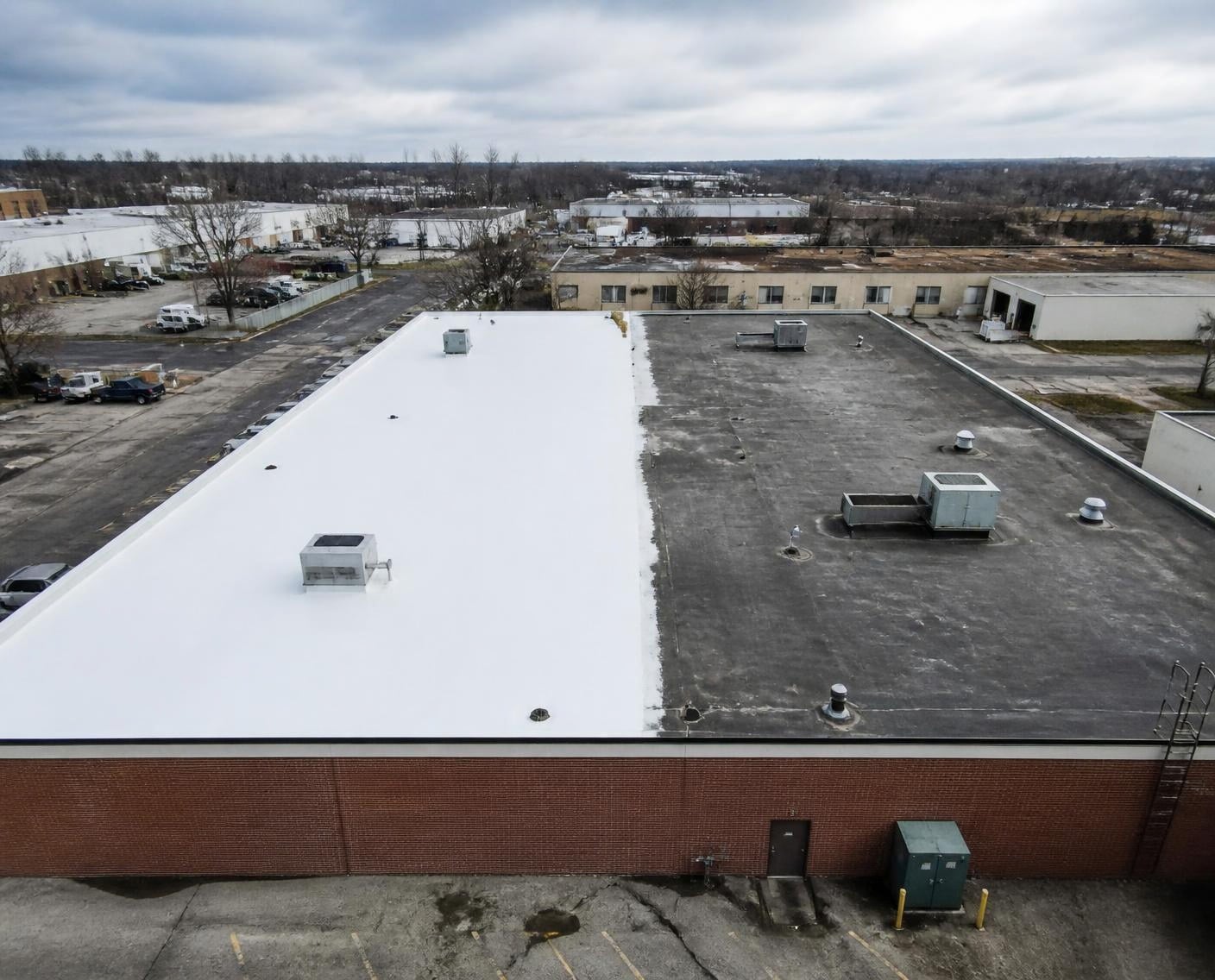
A coating is a fluid-applied membrane. It’s rolled or sprayed over the existing roof and cures into one continuous, seamless layer with no laps or fasteners for water to find. It bonds over the old surface, bridges small cracks and reflects UV so the roof underneath stops breaking down.
SPF, spray polyurethane foam, goes a step further. The foam is sprayed on first, where it expands into a rigid, insulating layer that can be built up to shed water off low spots, then it’s protected with a coating on top. You end up with a new waterproof surface and added insulation in one system, without tearing the old roof off.
Snow is the obvious one. Lake-effect storms pile weight onto low-slope roofs and leave it there, and when it melts the water has nowhere fast to go. Ponding water sits against seams for days. Every freeze-thaw cycle through the winter then works that water into laps and fastener holes, opening them a little more each time.
Summer finishes the job. UV dries out membranes and asphalt surfaces until they crack and chalk, and metal roofs expand and contract enough to loosen fasteners. By the time a leak shows on the ceiling, the damage has usually been building for a few seasons. A coating stops that cycle by replacing the worn surface with a continuous one that doesn’t have seams to open.
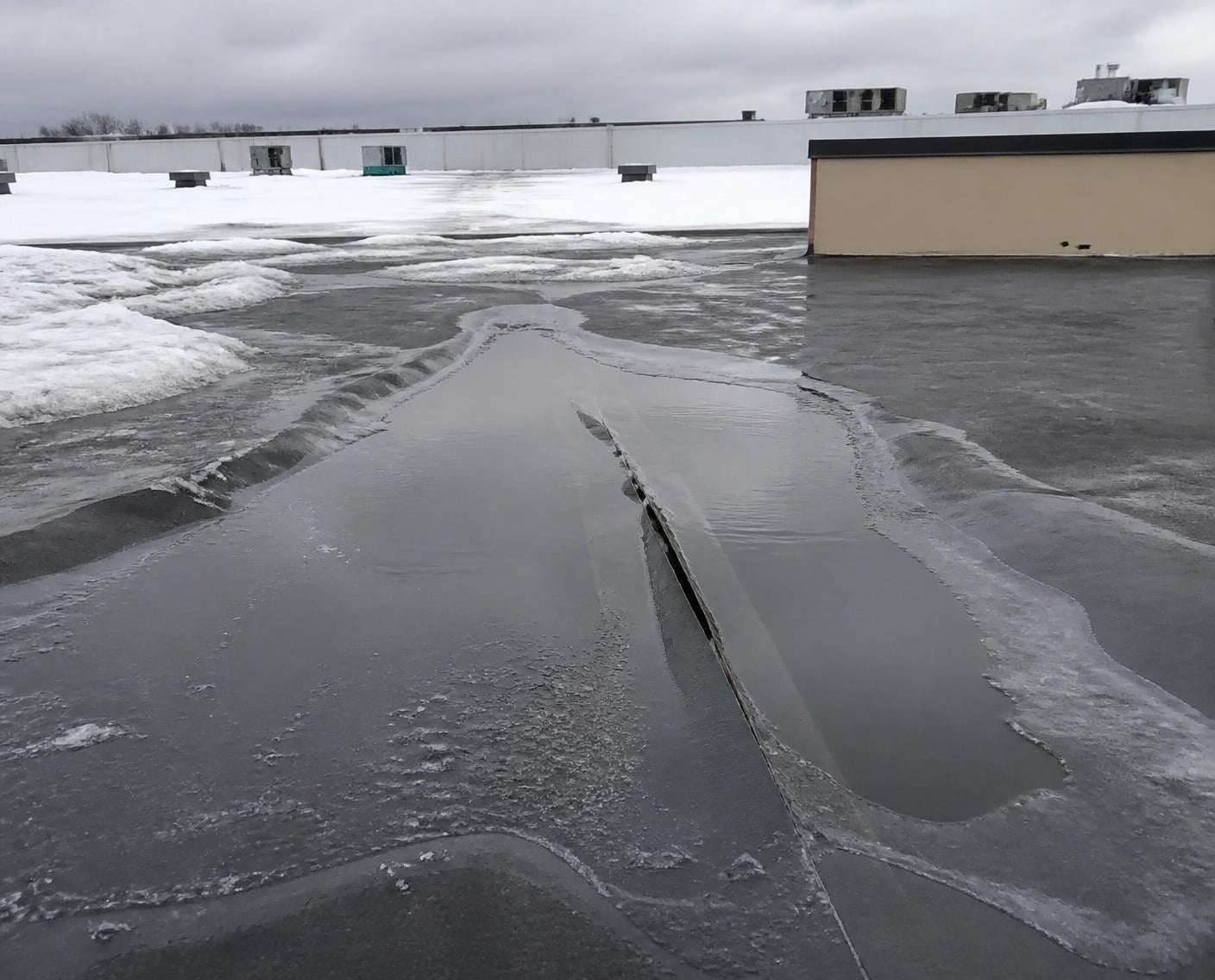
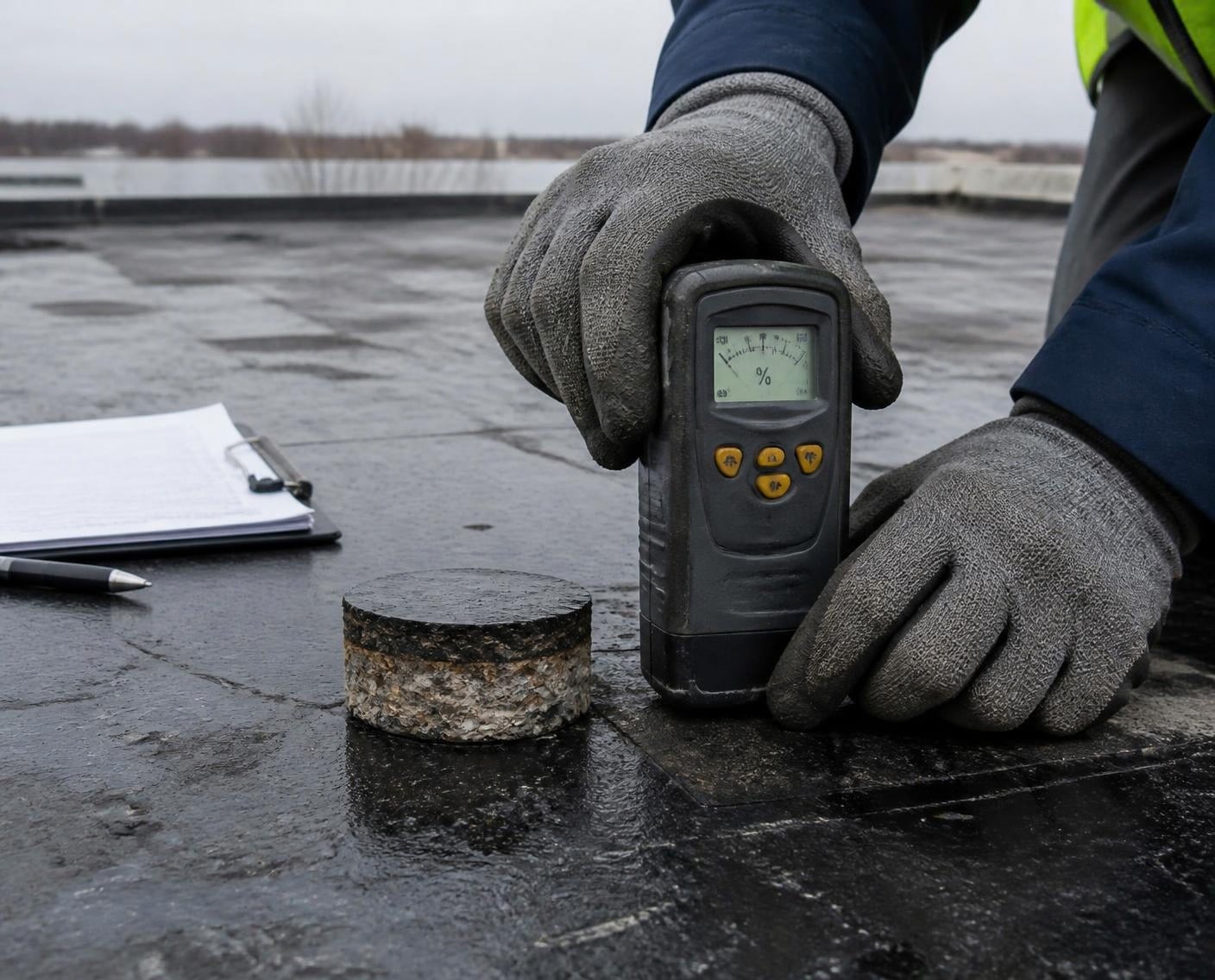
Coating makes sense when the problem is the surface, not the structure. Leaking seams, cracked or chalky membranes, rusting metal, blistered built-up roofs: all good candidates. It doesn’t make sense when the deck is rotted or soft, or when the existing roof is holding a lot of trapped water, because sealing wet material in just moves the problem. That’s why we check the roof properly before recommending anything.
When coating is the right call, the savings are real. There’s no tear-off, no dumpster full of old roofing and far less disruption to the building. The roof stays in service while we work. And unlike a replacement, the system can be recoated at the end of its life instead of removed.
We work with acrylic, silicone and elastomeric coatings, plus SPF roofing. Each has a job it’s best at. Silicone is the usual choice where water ponds, which matters on Western New York flat roofs after the snow melts. Acrylic is highly reflective and cost-effective on roofs that drain well. Elastomeric coatings stretch and recover through temperature swings, which suits metal roofs that expand and contract. SPF is the pick when the roof needs insulation and a better slope as well as waterproofing.
We’ll recommend a system based on your roof, not on what’s easiest for us. Warranties are available at 5, 10, 15 and up to 25 years, depending on the system and the thickness applied.
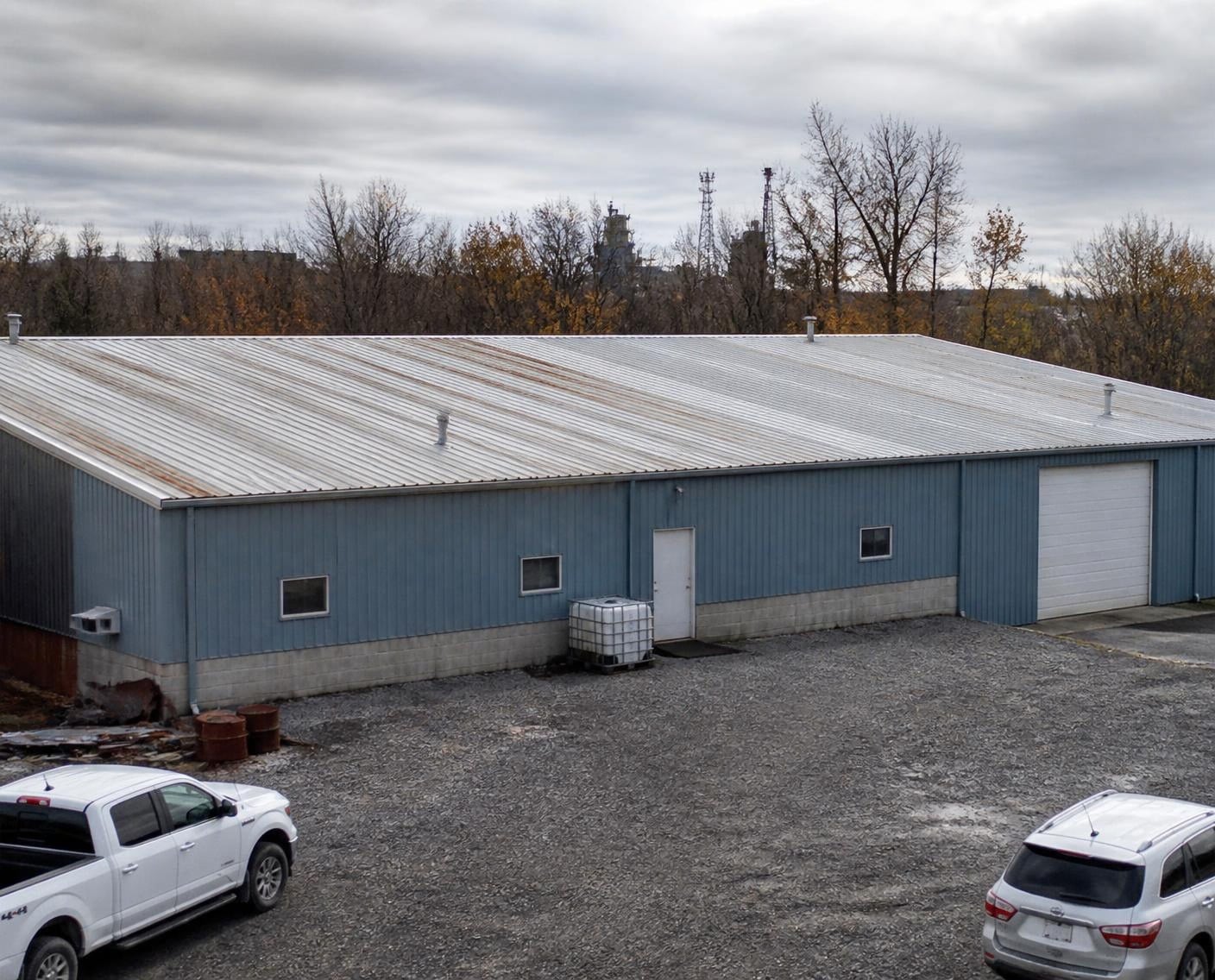
Coating suits commercial buildings like warehouses, shops, schools and churches, agricultural buildings such as pole barns, and residential low-slope roofs over porches, additions and garages. Metal, modified bitumen, EPDM, TPO and built-up roofs can all be coated if they’re in the right condition. Steep shingle roofs are a different product and aren’t usually coated.
The warning signs that a roof is ready for coating are easy to spot from a ladder: water standing a day or two after rain, seams lifting at the edges, rust streaks around fasteners on metal, blisters or bare patches on a built-up roof, and granules or grit collecting at the drains. Catch it at that stage and coating is usually an option. Wait until the deck is soft and it usually isn’t.
It starts with an inspection. We walk the roof, check for soft spots and look for trapped moisture, because coating over a wet roof is how coatings fail. Any saturated sections get cut out and replaced first.
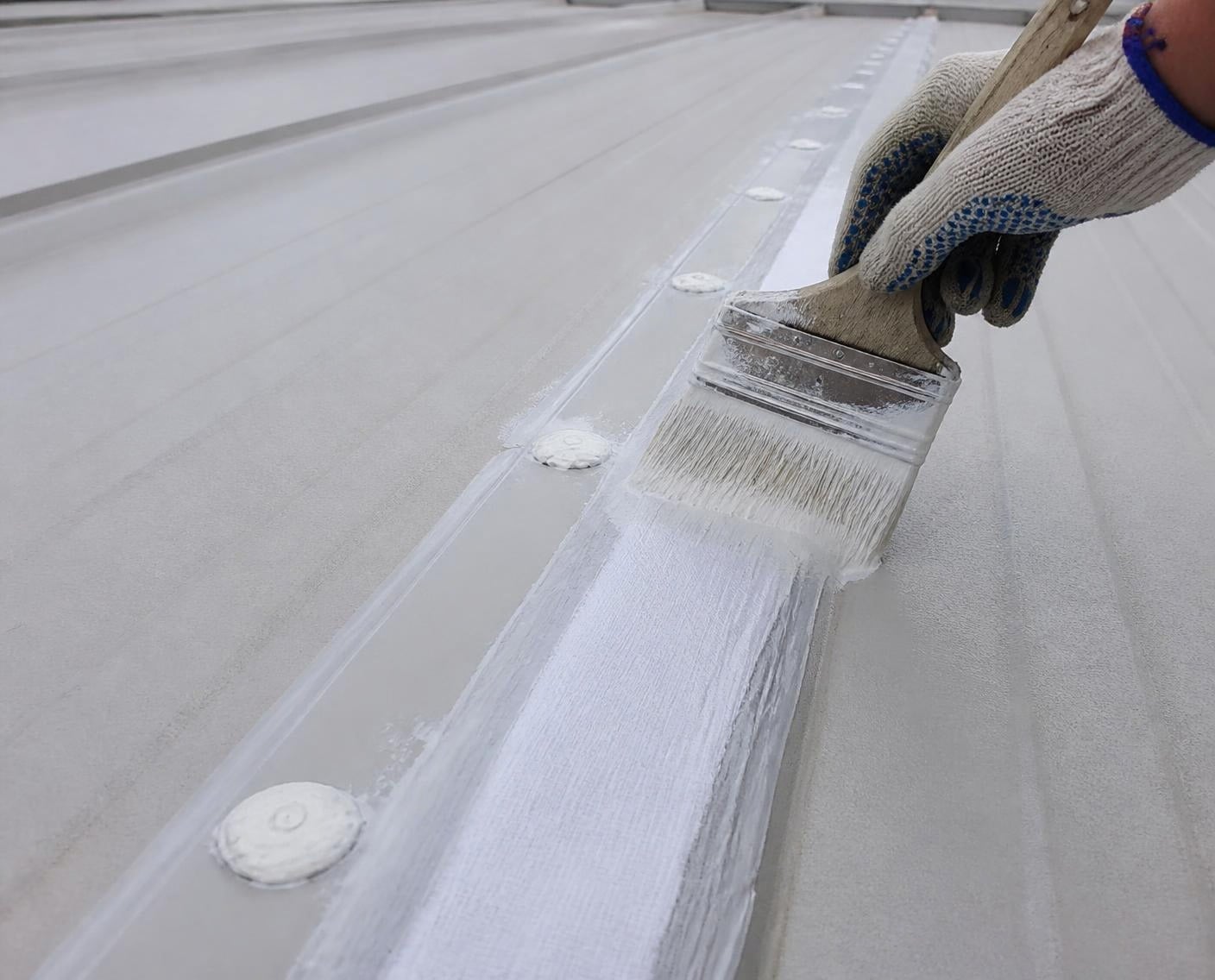
Then the prep, which is where a coating lives or dies. The surface is power washed, loose material is removed, and seams, fasteners, flashings and penetrations are reinforced. Metal roofs get rust treated. Some surfaces need a primer so the coating bonds properly.
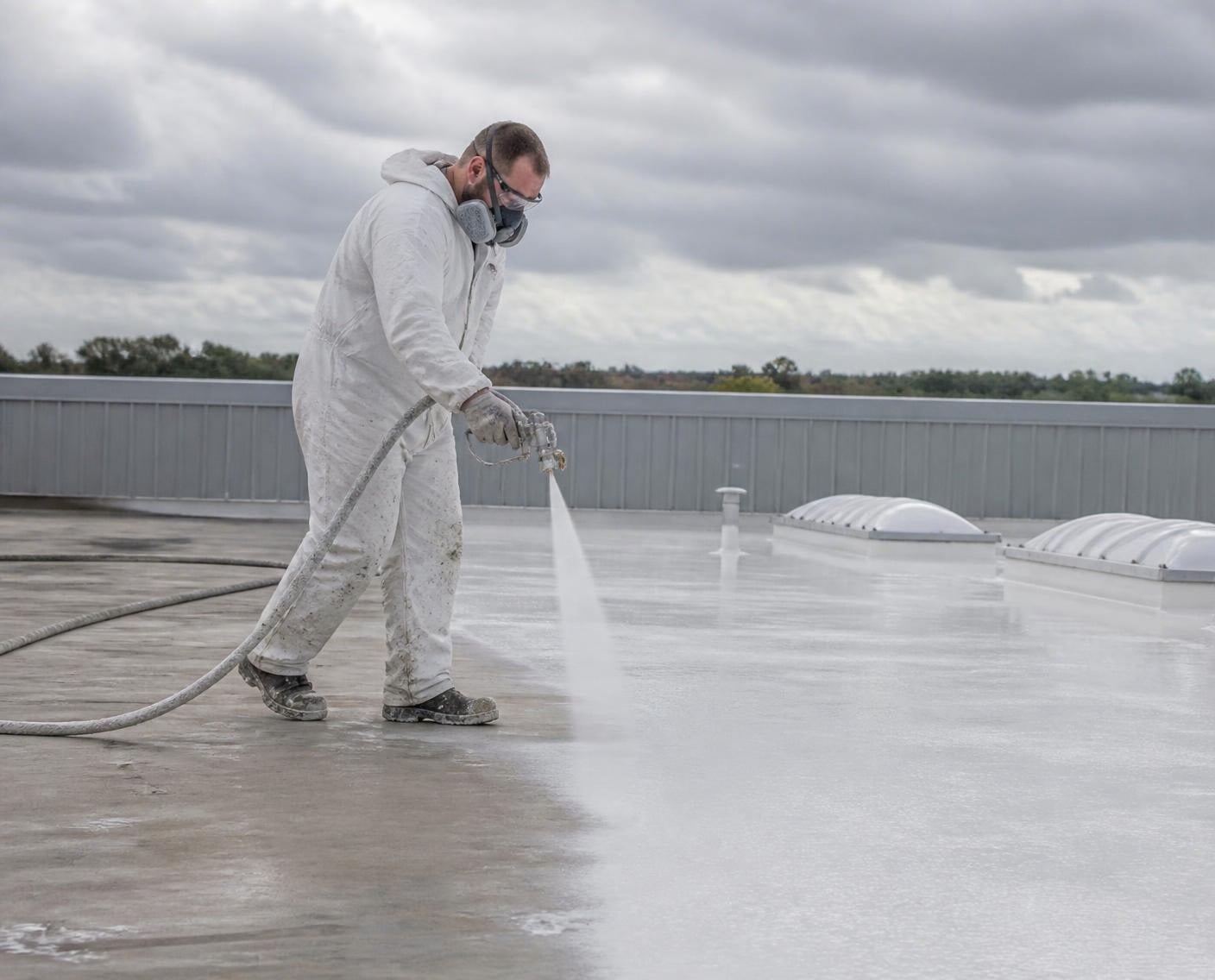
The coating goes on in coats to a specified thickness, with extra build-up at seams and details. On an SPF job, the foam is sprayed first and the coating follows the same day or shortly after, since exposed foam doesn’t like UV. We finish with a walk-through and the warranty paperwork. Most low-slope roofs are done in a few days, weather permitting, and the building stays in use the whole time.
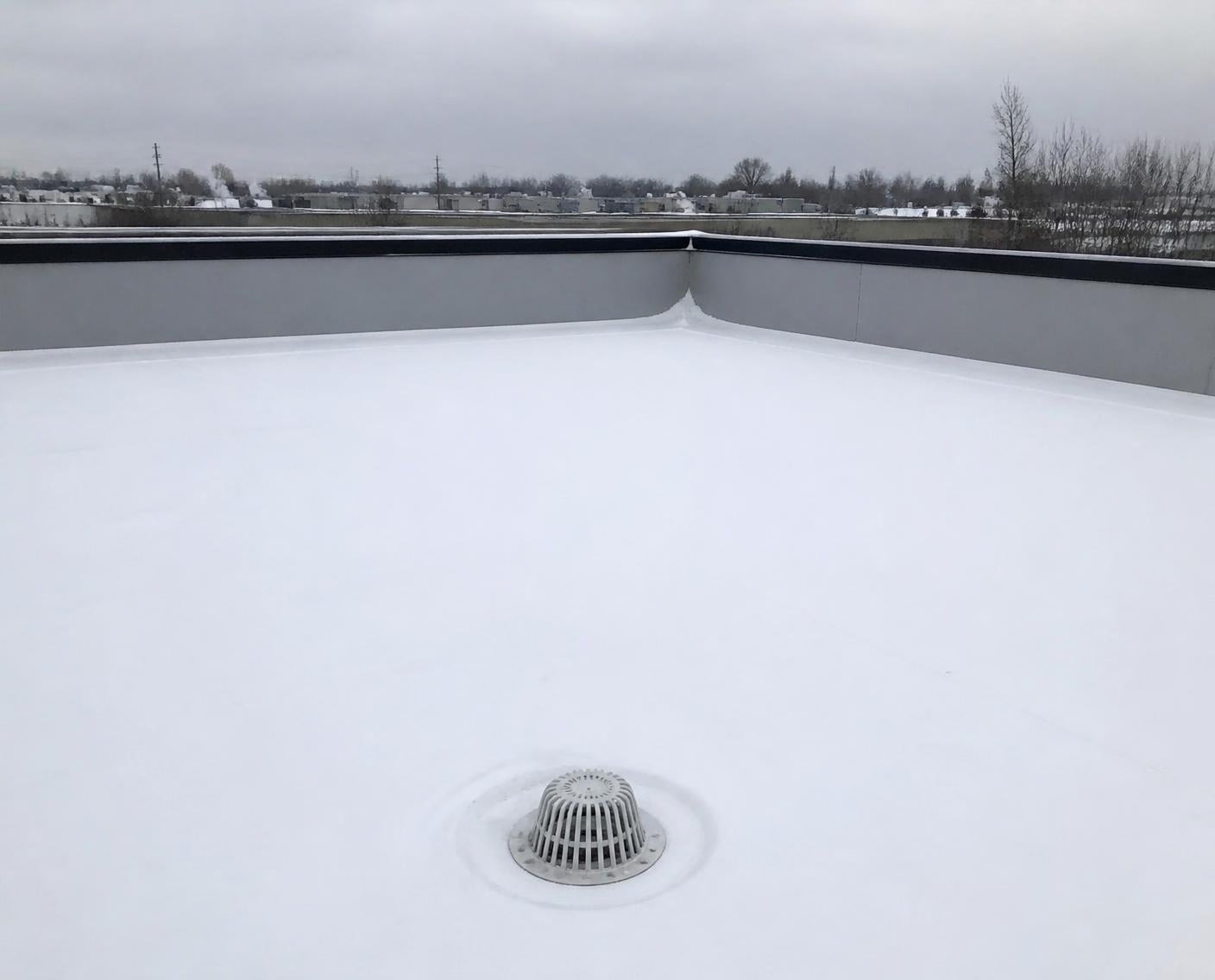
Life expectancy follows the system and the thickness. A properly applied coating typically lines up with the warranty term chosen, which is why a thicker, longer-warranty application costs more upfront and less per year. Keep an eye on it after hard winters: clear debris off the surface, keep drains and scuppers open, and have any mechanical damage patched early. At the end of its life, the roof gets cleaned and recoated rather than torn off. Timing matters too. Coatings need dry days and mild temperatures to cure properly, so plan work for the warmer months.
Our New York crew is based in Falconer and coats commercial and residential roofs across Falconer, Jamestown, Ellicottville, Gowanda, Hamburg, Olean, Mayville and Fredonia, plus the rest of Chautauqua and Cattaraugus County. Pennsylvania building? Our Cochranton crew handles roof coatings in Pennsylvania.
We’ll inspect the roof, check the deck and the existing surface, and tell you straight whether it’s a coating candidate. If it’s not, we’ll say so. You’ll get a written quote with the system, thickness and warranty spelled out. Book your free roof assessment.