

Are you looking to extend the life of your roof? As a trusted roof coating contractor serving New York and Pennsylvania, HD Insulation Solutions provides professional coating systems designed to protect roofs from UV rays, heavy rain, snow, and harsh winds.
Our commercial roof coating and residential roof coating solutions create a seamless, waterproof barrier that helps prevent leaks and extend roof lifespan. We specialize in SPF roof coating, an energy-efficient option that restores and reinforces existing roofing systems without the cost of full replacement.
With roof coating services from HD Insulation Solutions in Falconer, NY and Cochranton, PA, you can protect your investment and improve long-term performance with a durable protective system.
Up To 25 Year Warranties Available!
You may not need a replacement. Add life to your existing roof today with a professional SPF roof coating solution.
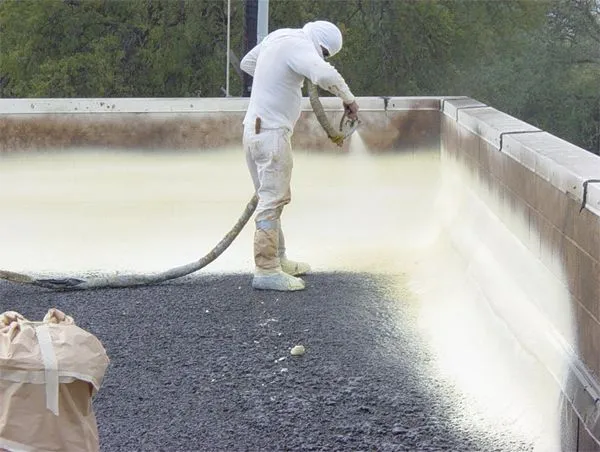
SPF roofing is a durable, seamless, and waterproof option that seals and protects your roof while providing excellent insulation. Its long lifespan helps prevent costly repairs and replacements. SPF roofing can be applied over existing roofing systems, reducing costs and avoiding a full tear-off.
Up To 25 Year Warranties Available!
A re-roof removes everything down to the deck and builds a new roof on top. It’s the right answer when the structure underneath has failed. It’s an expensive, slow and messy answer when only the surface has.
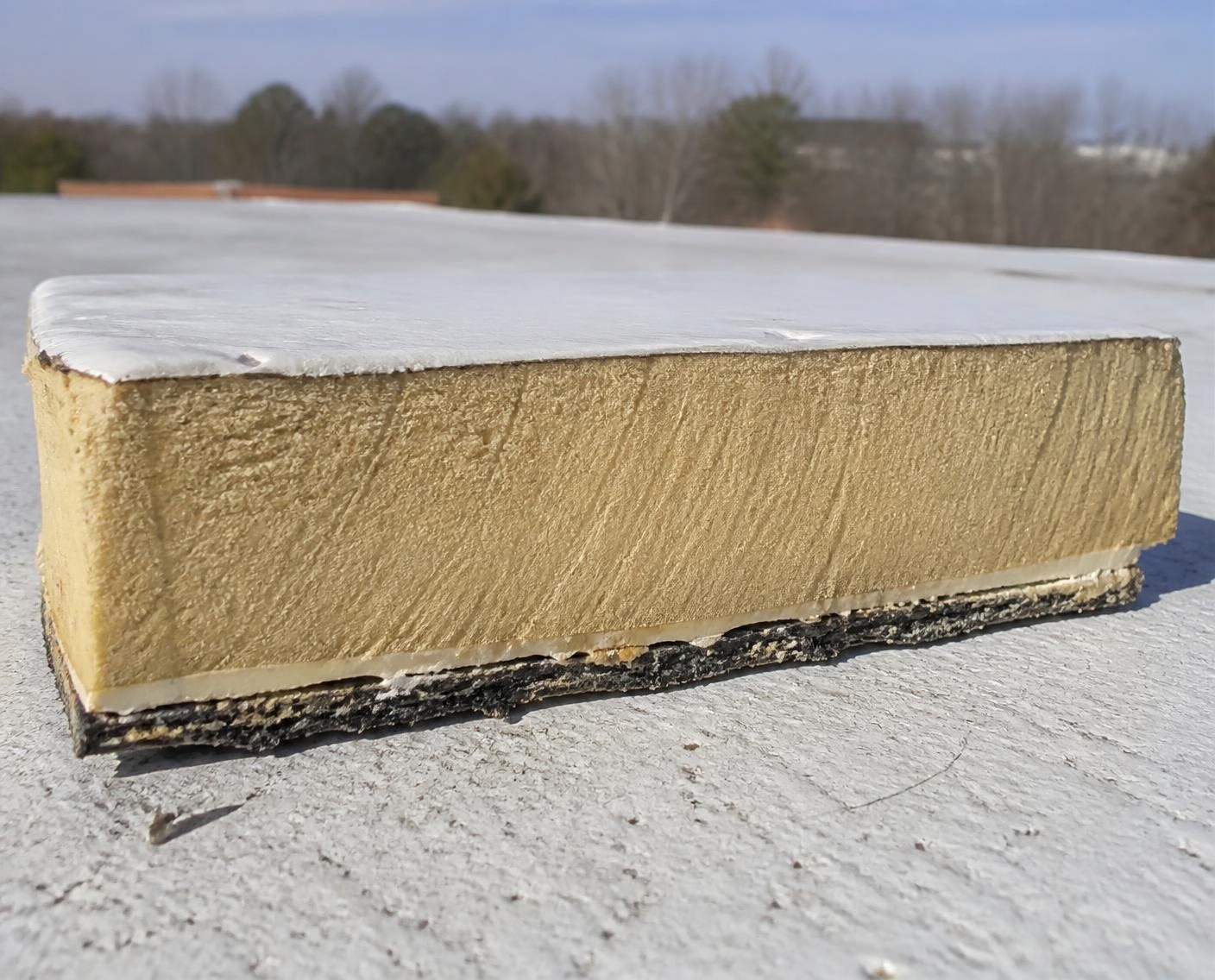
SPF roof coating works from the other direction. Spray polyurethane foam is applied directly over the existing roof, where it expands and hardens into a rigid, seamless layer. Because it’s sprayed, it can be built thicker over low spots so water drains instead of ponding. Then a protective topcoat goes over the foam to shield it from UV and weather. The old roof stays where it is, nothing goes to landfill, and you gain insulation at the same time, roughly R-6 for every inch of closed-cell foam.
Straight coatings without the foam layer work the same way on a smaller scale. They restore a worn surface with a continuous waterproof membrane, but they don’t add insulation or change the slope.

Most flat roof leaks get patched: a bucket of mastic on the seam that’s dripping, another next spring on the one beside it. It works for a season. The trouble is that a leak is usually a symptom of the whole surface ageing at once. Every seam on that roof has been through the same winters and the same sun, so fixing one just moves the next leak a few feet along.
A coating treats the entire surface in one go. Every seam, fastener and flashing is reinforced and then covered by the same continuous membrane, so there’s no next-weakest seam waiting to fail. For owners who’ve been paying for patch repairs every year, the math usually tips toward coating within a couple of seasons.
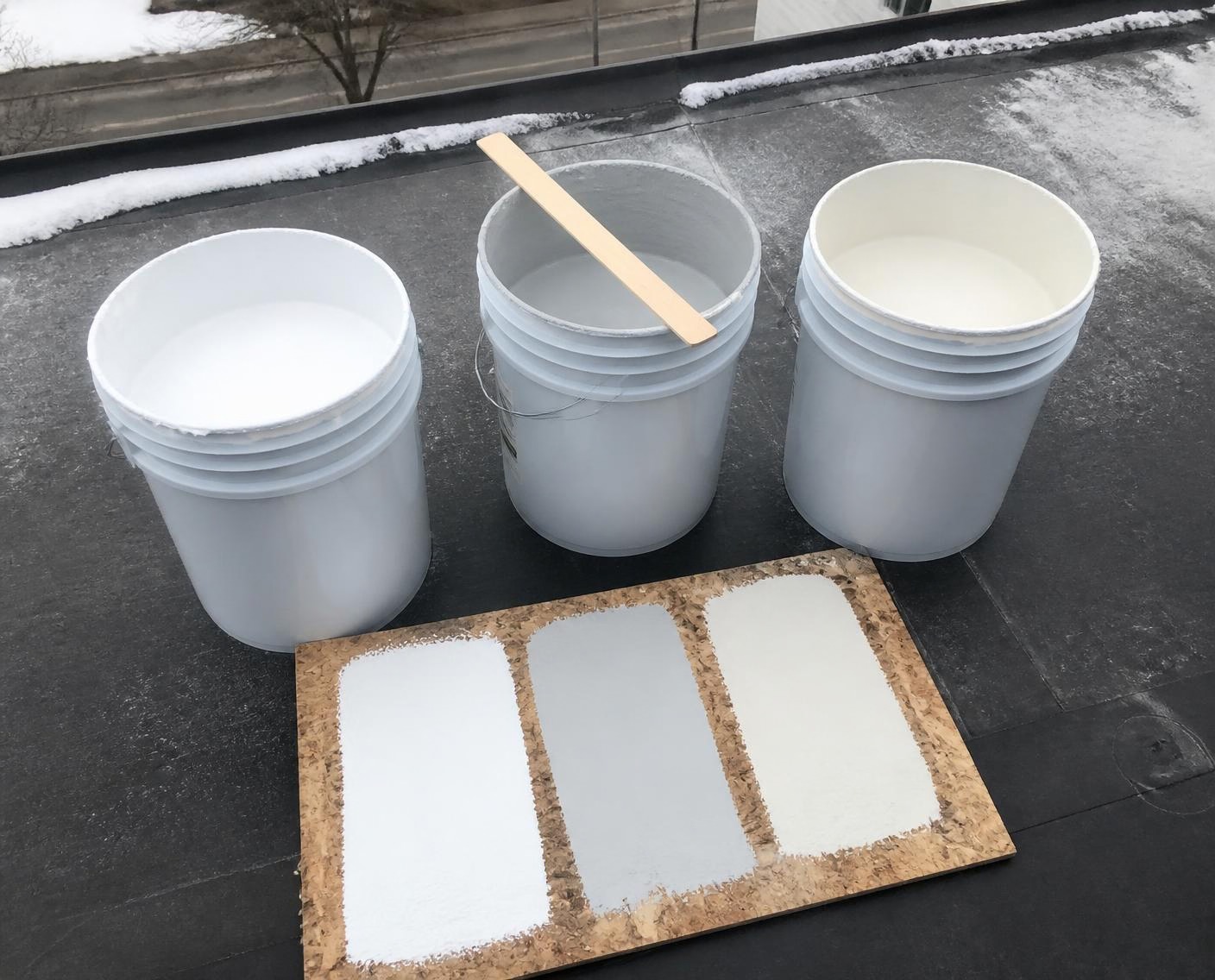
No single coating suits every roof, and a contractor who only sells one is fitting your roof to their product. We install four:
Silicone for flat roofs where water sits after rain or snowmelt. It holds up under ponding water where acrylics struggle. Acrylic for roofs that drain properly and where reflectivity and budget matter most. Elastomeric coatings for metal and other roofs that move a lot through temperature swings. SPF roofing for buildings that need insulation, better drainage and a new waterproof surface in one system.
Warranty terms of 5, 10, 15 and up to 25 years are available. The term depends on the system and how thick it’s applied, so the quote spells both out.
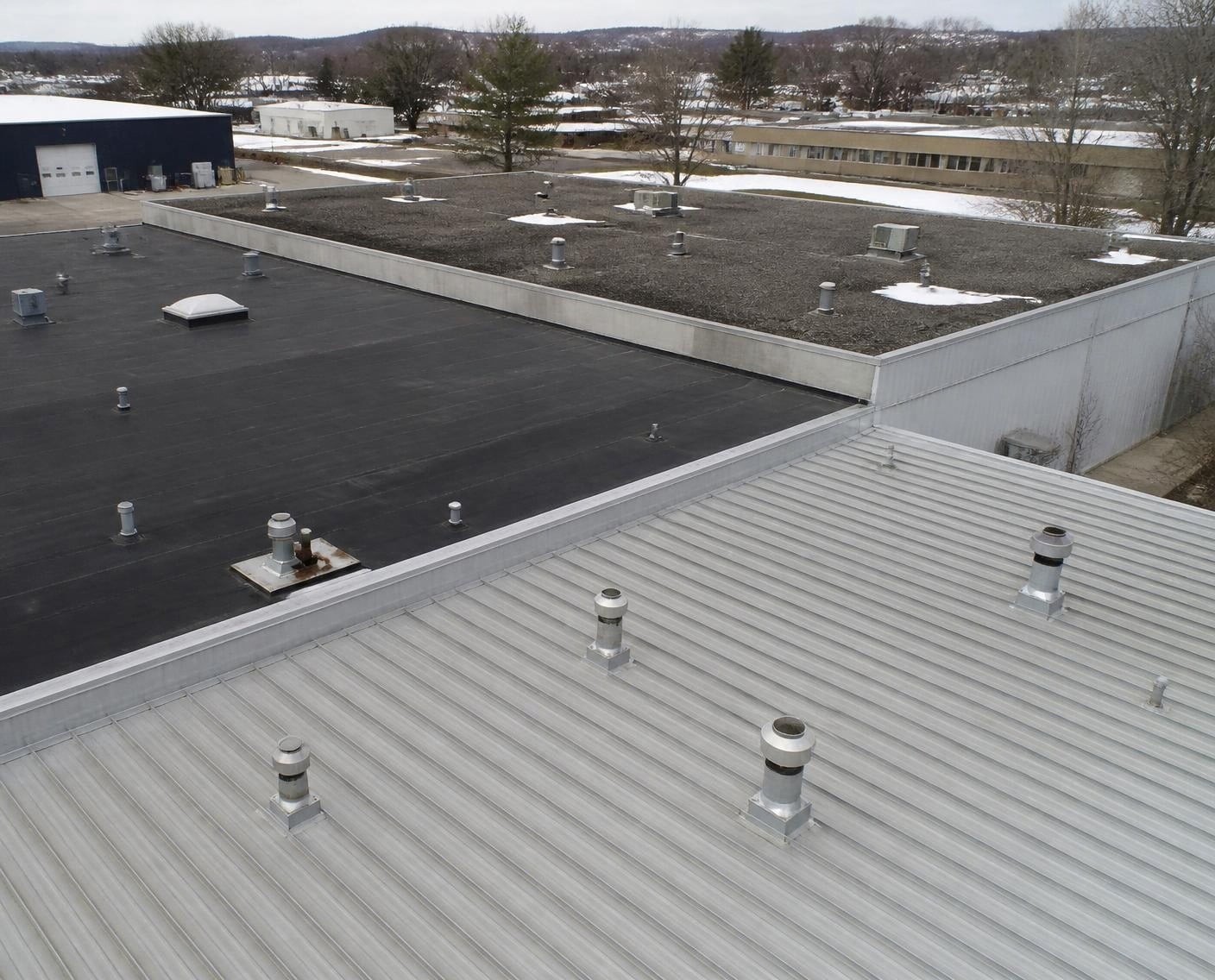
Coatings go over metal, EPDM, TPO, modified bitumen, built-up and existing foam roofs, as long as the deck underneath is sound. That covers most commercial flat roofs, warehouses, shops, churches, farm buildings and residential low-slope roofs over porches, garages and additions.
The problems they fix are surface problems: leaking seams and laps, cracked or chalking membranes, rust around fasteners, blistering, and roofs that have simply worn thin from years of sun. What a coating can’t fix is a rotten deck or a roof that’s full of trapped water. Sealing over wet material traps the moisture and the coating fails early. That’s the first thing we check for, and if a section is wet, it’s cut out and replaced before anything is applied.
The inspection comes first: we walk the whole roof, probe for soft areas and check for trapped moisture. You get a straight answer on whether the roof is a coating candidate before any quote is written.
On the day, the roof is cleaned, usually by power washing, and anything loose is removed. Seams, fasteners, flashings, drains and penetrations get reinforced, because that’s where roofs leak first. Rusted metal is treated and some surfaces are primed so the coating bonds properly. The coating then goes on in measured coats to the thickness the warranty calls for, with extra material at seams and details. On SPF roofs, the foam is sprayed and topcoated before UV has a chance to damage it.
Most jobs take days, not weeks, and the building stays in use while we work. Coatings need dry weather and mild temperatures to cure, so scheduling is part of doing it right.
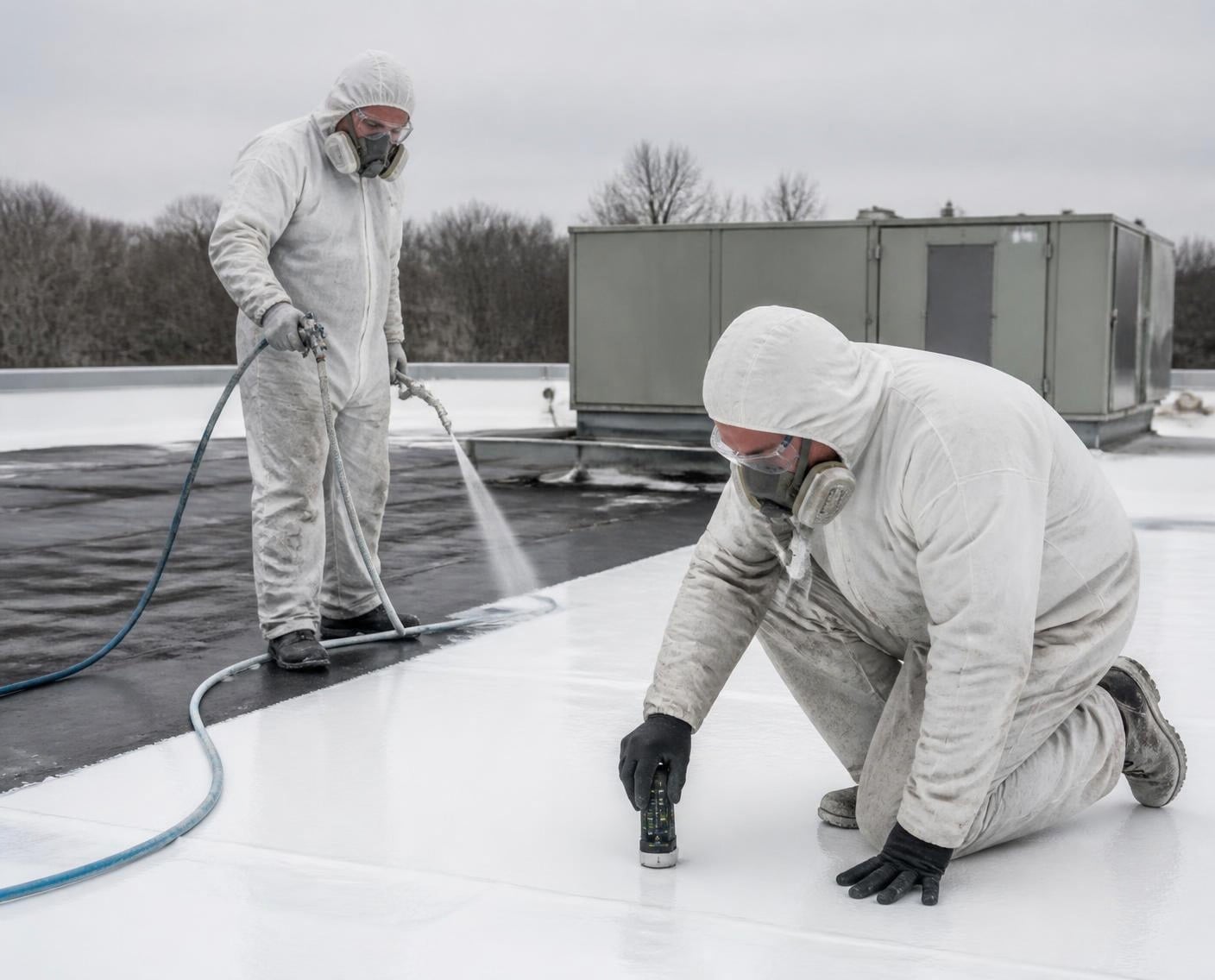

A well-applied coating lasts in line with the system and thickness chosen, which is why the warranty options range from 5 to 25 years. Thicker systems cost more upfront and less per year of service. The cheapest option on paper often isn’t the cheapest roof.
Maintenance is light but it matters. Clear leaves and debris so drains and scuppers keep flowing, check the roof after a hard winter, and get any punctures or mechanical damage patched early. When the coating reaches the end of its life, the roof is cleaned and recoated. No tear-off, just a fresh topcoat over a roof that’s already sound. Done on schedule, that cycle can keep a building’s original roof deck in service for decades, which is where the real saving over repeated replacement comes from.
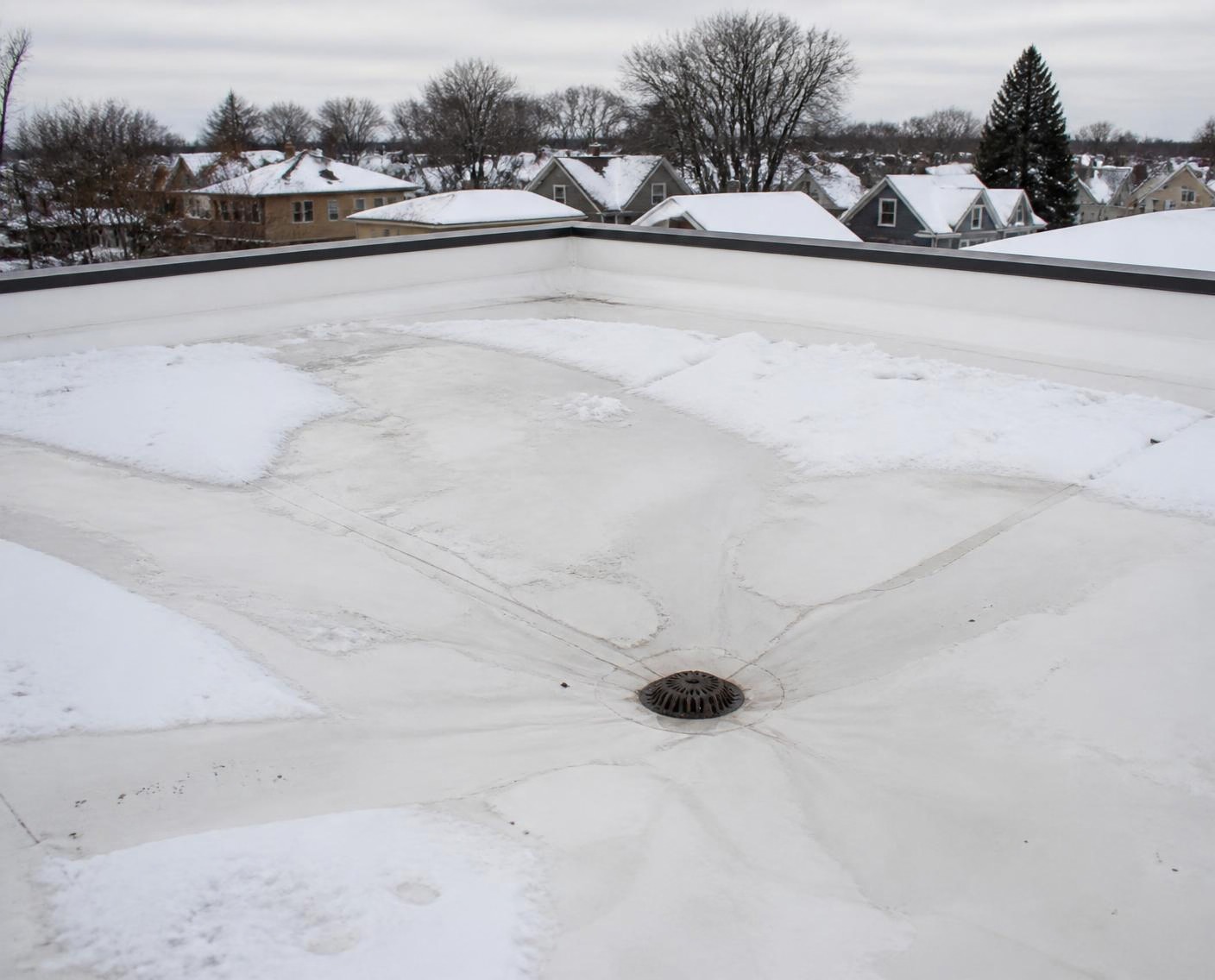
Roofs between Lake Erie and the Allegheny foothills deal with more than most coating brochures are written for. Heavy snow sits on low-slope roofs for weeks. Meltwater ponds against seams. Freeze-thaw cycles pry at every lap and fastener from November to April, and then the summer sun goes to work on whatever the winter loosened.
That shapes the system we recommend. Roofs that pond get silicone or an SPF build-up that restores drainage, not an acrylic that will soften under standing water. Seams, drains and edges get extra reinforcement because that’s where ice does its damage. And we schedule the work for the stretch of the year when temperatures and dry spells let the coating cure properly, because a coating rushed onto a cold, damp roof is a warranty claim waiting to happen.
Get those three things right and a coated roof handles a Chautauqua or Crawford County winter without complaint.

We run two crews. Our Falconer team handles roof coatings in New York across Chautauqua County, Cattaraugus County and the Southern Tier. Our Cochranton team covers roof coating in Pennsylvania across Crawford County and the rest of the northwest of the state. Both crews install the same systems with the same warranties, and both give free, written estimates.