
Roof coatings come with warranties anywhere from 5 to 25 years. That spread confuses people, and it should. Two roofs coated in the same week can last very different lengths of time, and the product on the label is only part of the reason.
Here’s what actually decides how long a coating lasts, and the small amount of upkeep that keeps it on track.
Thickness matters more than brand
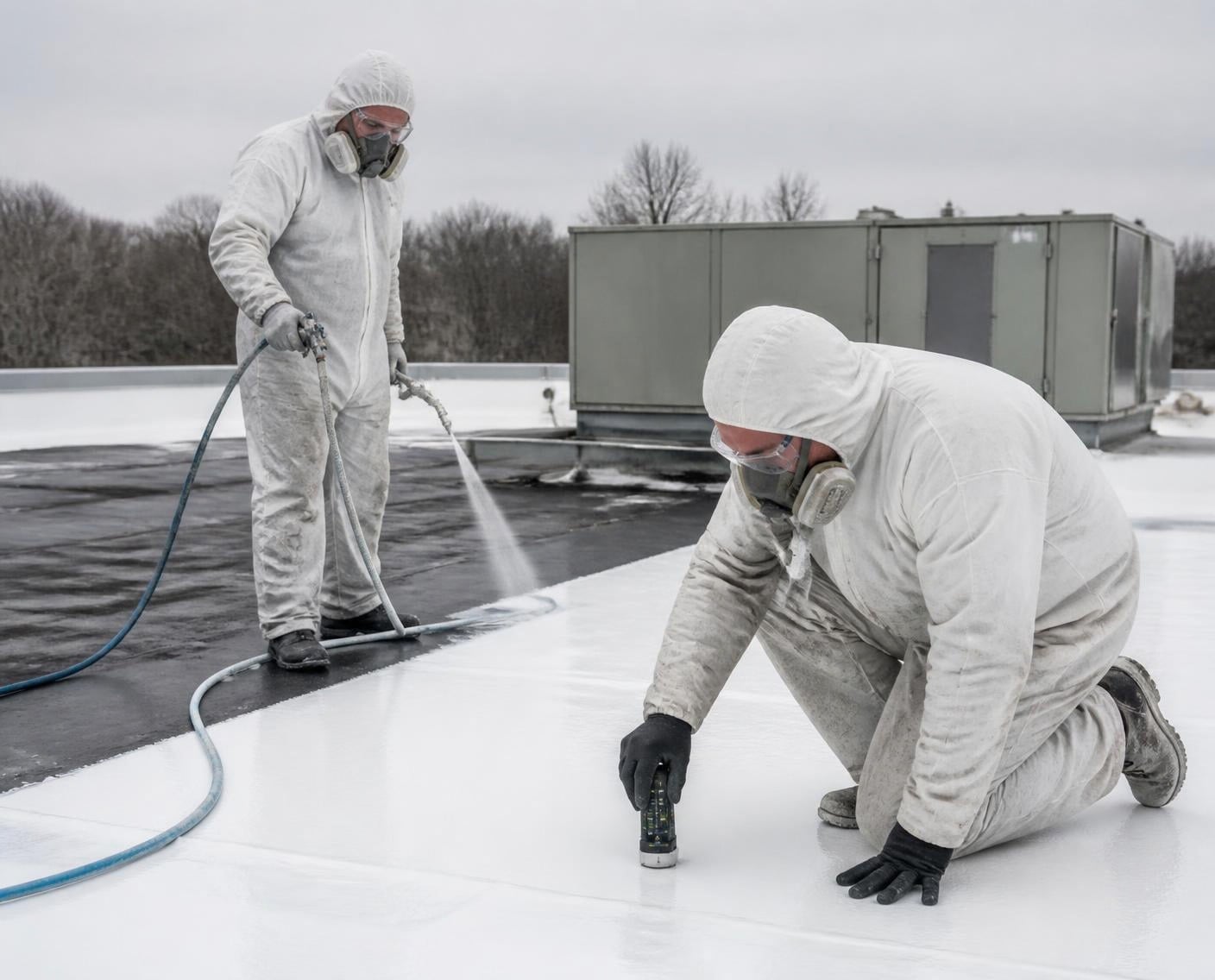
A coating’s life is closely tied to how much of it is on the roof. Manufacturers specify a dry film thickness for each warranty term, so a 20-year system isn’t a better product than a 10-year one so much as more of it, applied to a tighter spec.
That’s why the cheapest quote is often the thinnest coat. On paper it’s the same material. On the roof it can have a much shorter life. When comparing quotes, ask what thickness is being applied and what warranty term that supports. If the answer is vague, the coat probably will be too.
The right system for the roof
Not every coating suits every roof, and a mismatch shortens life fast.
- Silicone tolerates ponding water, which makes it the usual choice for flat roofs that hold water after rain or snowmelt.
- Acrylic is reflective and economical, but it’s better suited to roofs that drain well. Standing water works against it.
- Elastomeric coatings stretch and recover, which suits metal roofs that expand and contract through big temperature swings.
- SPF systems add foam insulation under a protective topcoat and can be shaped to improve drainage. The topcoat is what gets renewed over time.
Industry bodies like the Roof Coatings Manufacturers Association publish technical guidance on these systems, and the takeaway is consistent: the system has to match the substrate and the conditions. A great coating on the wrong roof is a short-lived coating.
Prep decides the first five years
Most early coating failures aren’t product failures. They’re adhesion failures, and adhesion comes down to prep. The roof has to be clean, dry and sound. That means power washing, removing anything loose, reinforcing seams, fasteners and flashings, treating rust on metal and priming where the surface calls for it.
Moisture is the silent killer. A coating sealed over a wet deck or saturated insulation traps that water, and the coating blisters and lets go. A good contractor checks for trapped moisture before coating and cuts out anything wet, even when that means a bigger quote than the owner hoped for.
Weather at application
Coatings cure. They need dry weather and suitable temperatures to do it, and rain or cold during the cure window can compromise the finish. In Western New York and Northwest Pennsylvania, that means the application season is realistically the warmer months. A coating rushed onto a cold, damp roof late in the year is a problem you’ll meet again in spring.
Does a coated roof handle snow?
Yes, provided the system and prep are right. The damage snow does to low-slope roofs mostly comes from what happens when it melts: water ponding against seams, then freezing and expanding in any gap it finds. A properly applied coating removes those seams from the equation. It’s one continuous membrane, so there’s nothing for meltwater to work into.
Where coated roofs do struggle is ponding on the wrong system and mechanical damage from snow removal. Match the coating to the drainage, keep drains clear through the winter, and have anyone clearing the roof use plastic tools and leave a thin layer of snow rather than scraping to the surface. Metal shovels and ice picks gouge coatings in a way the weather never will.
The upkeep that keeps it going
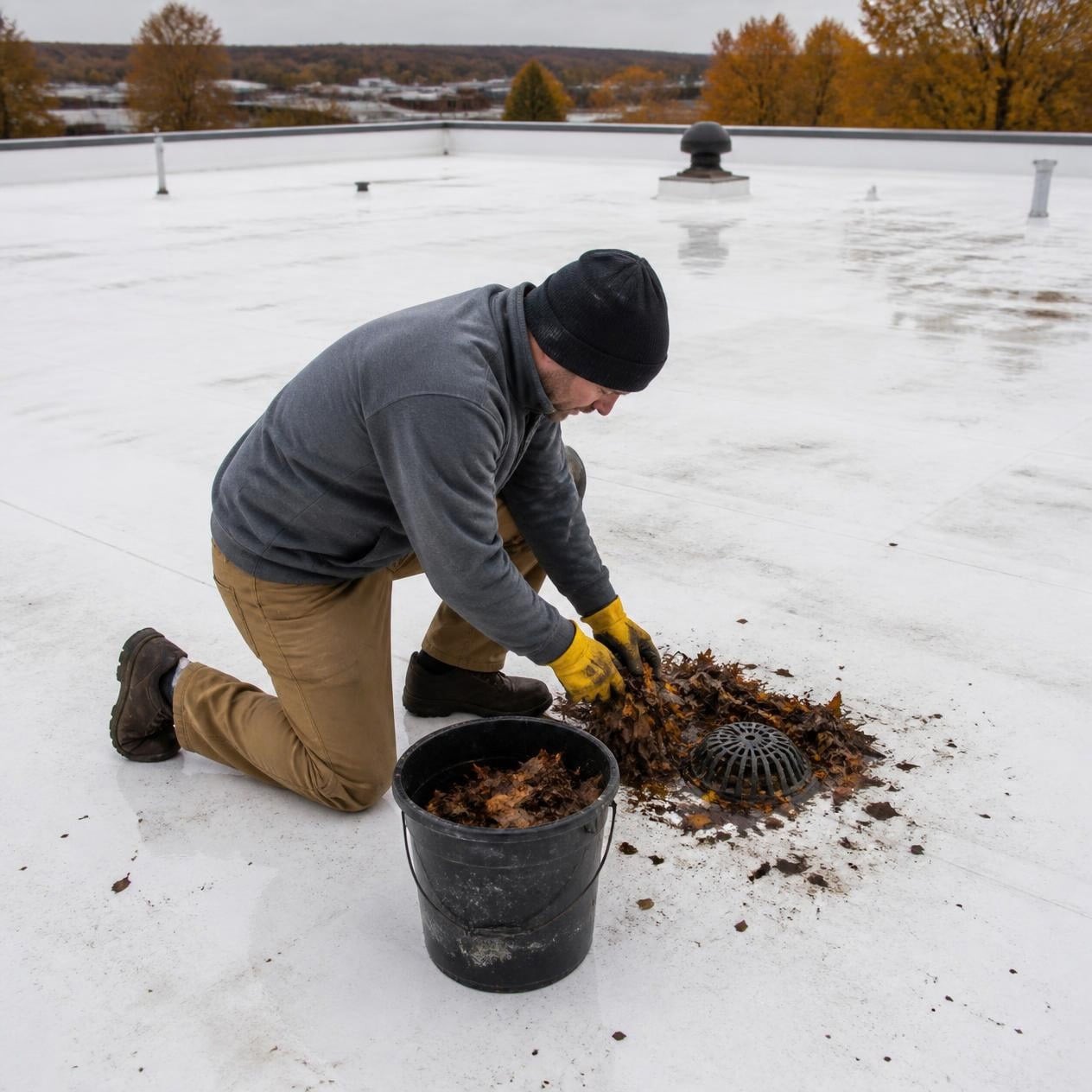
The maintenance a coated roof needs is light, but skipping it is how a long-warranty roof ends up needing work years early.
- Keep drains, scuppers and gutters clear so water leaves the roof.
- Clear leaves, branches and debris, which hold moisture against the surface.
- Walk or inspect the roof after a hard winter and after major storms.
- Get punctures, foot-traffic damage and damaged flashings repaired early, while they’re small.
- Keep rooftop equipment work under control. HVAC techs dragging tools across a roof do real damage.
Signs a coated roof needs attention
Coatings age gradually, and you can usually see it coming. Look for areas where the coating has worn thin and the original surface is showing through, especially around foot-traffic paths and rooftop units. Check for blisters, peeling at the edges and cracking around penetrations. On SPF roofs, any spot where bare foam is exposed needs recoating promptly, because unprotected foam degrades in sunlight.
Water that sits longer than it used to is another sign. It can point to a blocked drain, or to a low spot that has developed and needs attention before the coating over it wears through.
Read the warranty, not just the number
Two 15-year warranties can mean very different things. Some cover the coating material only. Others are system warranties that cover labor and materials if the roof leaks. Many require periodic inspections or documented maintenance to stay valid. Ask for the warranty document before you sign, and check what it requires of you as the owner.
What happens at the end of its life
This is the part that makes coating good value over the long run. When a coating reaches the end of its service life, the roof doesn’t need tearing off. It gets cleaned, any damage is repaired, and a new coat goes on. Done on schedule, that cycle can keep the same roof deck in service far longer than a single replacement would, without the tear-off cost each time.
Getting the right answer for your roof
If you’re weighing up roof coatings for a building, start with an inspection that checks the deck and any trapped moisture, then a quote that names the system, the thickness and the warranty term. Our Falconer crew handles coating work across Western New York, and the Cochranton crew covers roof coating jobs in Northwest Pennsylvania. Both give free, written estimates.