
A flat or low-slope roof starts leaking, you call for quotes, and nearly every one says the same thing: tear it off and replace it. Sometimes that’s right. Often it’s the most expensive answer to a problem that’s only skin deep.
The decision comes down to one question. Has the surface failed, or has the structure? Here’s how to tell the difference, and why it matters so much to the bill.
What a coating actually is

A roof coating is a fluid-applied membrane. It’s rolled or sprayed over the existing roof and cures into one continuous, seamless layer. Silicone, acrylic and elastomeric coatings each suit different roofs. Spray polyurethane foam (SPF) systems go further: foam is sprayed first to add insulation and fix drainage, then a protective coating goes on top.
The key point is that the old roof stays in place. The coating replaces the worn-out surface, not the roof underneath it.
Coating is usually the right call when
- Leaks are coming through seams, laps or around fasteners rather than through a soft or sagging area.
- The membrane is cracked, chalky or worn thin from sun, but the deck feels solid underfoot.
- A metal roof has surface rust and loose fasteners but the panels haven’t rusted through.
- A built-up or modified bitumen roof has blistering and surface wear without widespread saturation.
- You’ve been patching the same roof every year and the leaks keep moving.
That last one is worth dwelling on. A roof where you patch one seam and the next one starts leaking a season later is telling you the whole surface has aged at the same rate. Patching chases it seam by seam. Coating treats the entire surface in one job.
Replacement is usually unavoidable when
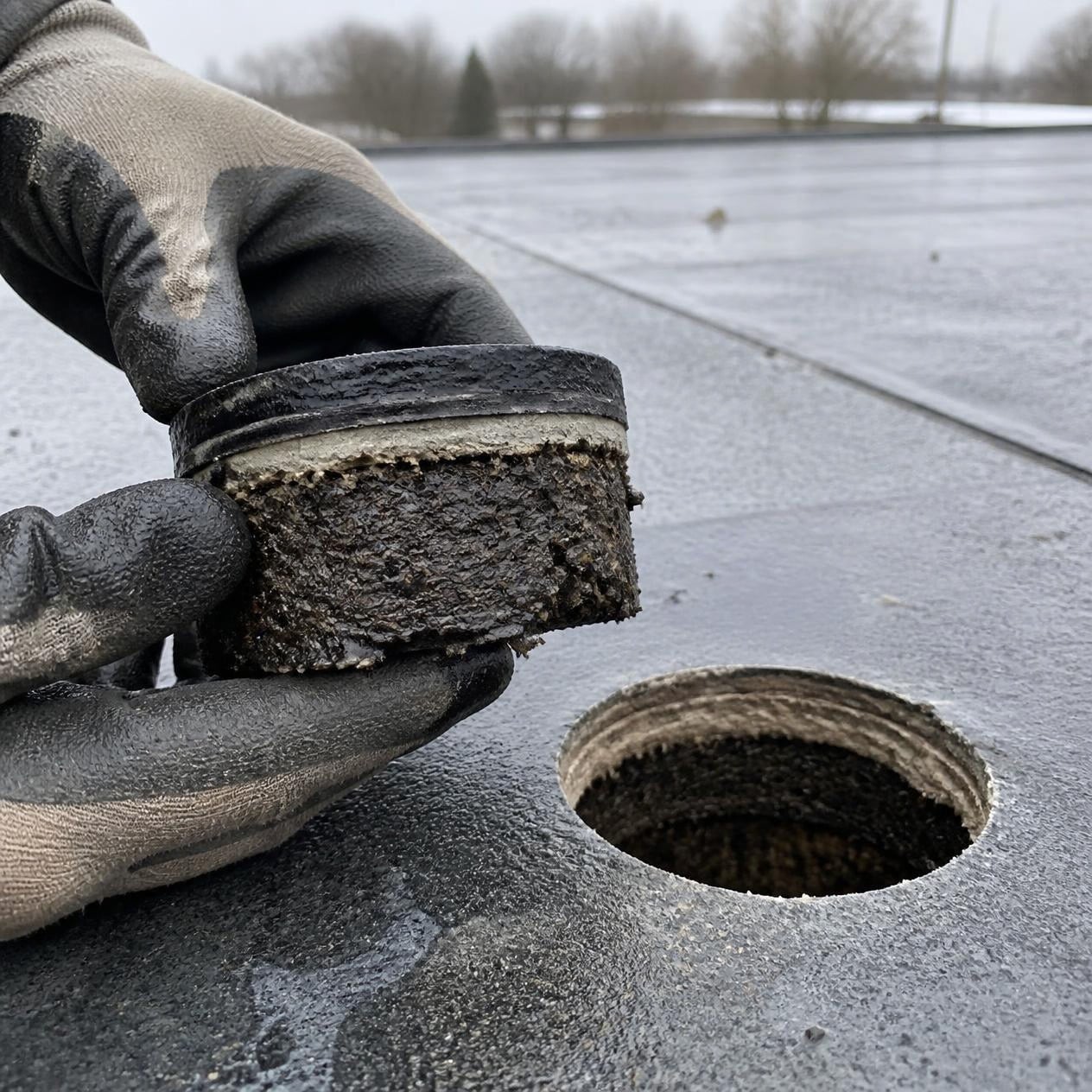
- The deck is soft, spongy or sagging anywhere you walk.
- Large areas of the existing roof are saturated with trapped water.
- Metal panels have rusted through, not just on the surface.
- The roof has already been coated or re-covered multiple times and code limits on layers come into play.
Trapped moisture is the big one. Coating over a wet roof seals the water in, and the coating fails early while the deck underneath keeps rotting. A proper assessment checks for moisture before anyone recommends anything. If a contractor quotes a coating without walking the roof and checking what’s under the surface, be wary.
Why the cost difference is so large
Replacement means tearing the old roof off, hauling and disposing of it, and building a new system from the deck up, with the building open to the weather while it happens. Coating skips the tear-off and the disposal entirely. The prep work is real: cleaning, reinforcing seams and flashings, cutting out any wet sections. But the job is measured in days, and the building stays in use.
There’s an energy angle too. Reflective coatings keep the roof surface cooler in summer, which the Department of Energy covers in its guide to cool roofs. SPF systems add a continuous layer of insulation over the deck at the same time, which matters on a heated shop or warehouse through a long winter.
The snow-belt factor
Roofs between Lake Erie and the Allegheny foothills fail in predictable ways. Snow sits for weeks, meltwater ponds against seams, and freeze-thaw cycles open laps and fastener holes a little more each winter. That’s exactly the kind of surface failure coatings are built to fix, as long as the system matches the roof. A roof that ponds needs silicone or an SPF build-up to restore drainage, not a coating that softens under standing water.
Commercial, agricultural and residential roofs
Coatings get talked about as a commercial product, and warehouses, shops and offices are the classic use. But the same logic applies to a pole barn with a rusting metal roof, a church with a tired built-up roof, or the flat section over a porch, garage or addition on a house.
On smaller residential roofs the math shifts a little. A tear-off on a small flat section isn’t a huge job, so coating makes most sense there when the existing membrane is sound and the goal is to stop leaks and extend its life. On large commercial and agricultural roofs, avoiding a tear-off is where the big savings sit, and coating is usually worth serious consideration before anyone signs a replacement contract.
What a coating won’t fix
Coating isn’t a cure-all, and it helps to know its limits before you get quotes. It won’t fix a structural problem, a rotten deck or a roof that’s badly saturated. It won’t correct serious drainage problems on its own, though an SPF build-up can re-shape low areas. And it won’t bond properly to a surface that hasn’t been cleaned and prepared, which is why prep is where cheap coating jobs cut corners.
Questions to ask any coating contractor
- Did you check the roof for trapped moisture, and how?
- Which coating system are you proposing, and why that one for this roof?
- What thickness will be applied, and what warranty term does that support?
- Does the warranty cover materials only, or labor and materials?
- How will seams, fasteners, drains and flashings be reinforced before coating?
- What happens if you find wet sections once the work starts?
A contractor who answers those clearly, in writing, is usually one worth hiring. Vague answers on moisture and thickness are the two biggest red flags, and they’re worth pushing on before you sign anything.
Getting a straight answer
The only way to know for sure is an inspection: walk the roof, check the deck, look for trapped moisture and assess the seams and flashings. That should come before any recommendation, and it should end with a clear yes or no on coating.
We offer that assessment free. Our Falconer team handles roof coating work across Western New York, and our Cochranton team covers coating flat and metal roofs in Pennsylvania. You can also read more about the coating systems we install. If your roof needs replacing, we’ll tell you that too.